Home
Explore Uedu
Student Console
Register as Member/Login
Research Informed Consent Center
問卷中心
Teacher Console
Course Setup
Support & Messages
Uptime Data

UeduGPTs

--

Jupyters

0

Local AI

--

CISOSE26 本地 AI UG26
臺北 AQI 19 · 臺中 AQI 34 · 臺南 AQI 36 · 高雄 AQI 33

AI Reply Desktop Notifications

Show a desktop notification when the AI TA finishes replying

Chat Message Notifications

Notify me when classmates post messages in the forum

Sound notification

Play an alert sound whenever there is a new notification

Uedu Open / Biological Chemistry I
5.07SC

Biological Chemistry I

Prof. John Essigmann, Prof. Joanne Stubbe, Dr. Bogdan Fedeles | Fall 2013
Science & Math Biology Biochemistry Science
前往原始課程
CC BY-NC-SA 4.0
課程簡介

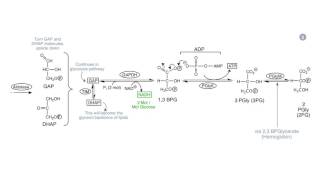
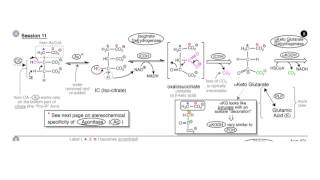
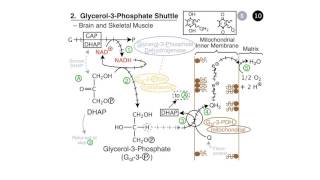
This course examines the chemical and physical properties of the cell and its building blocks, with special emphasis on the structures of proteins and principles of catalysis, as well as the chemistry of organic / inorganic cofactors required for chemical transformations within the cell. Topics encompass the basic principles of metabolism and regulation in pathways, including glycolysis, gluconeogenesis, fatty acid synthesis / degradation, pentose phosphate pathway, Krebs cycle and oxidative phosphorylation.

Course Format

This OCW Scholar course, designed for independent study, is closely modeled on the course taught on the MIT campus. The on-campus course has two types of class sessions: Lectures and recitations. The lectures meet three times each week and recitations meet once a week. In recitations, an instructor or Teaching Assistant elaborates on concepts presented in lecture, working through new examples with student participation, and answers questions.

MIT students who take the corresponding residential class typically report an average of 10–15 hours spent each week, including lectures, recitations, readings, homework, and exams. All students are encouraged to supplement the textbooks and readings with their own research.
The Scholar course has three major learning units, called Modules. Each module has been divided into a sequence of lecture sessions that include:

  • Textbook Readings
  • Lecture Notes or Storyboards
  • A video by Professor JoAnne Stubbe or Professor John Essigmann
  • Problem Sets and solutions

To help guide your learning, each of these problem sets are accompanied by Problem Solving Videos where Dr. Bogdan Fedeles solves one of the problems from the set.

Course Information
SourceMIT 開放式課程
科系Chemistry
LanguageEnglish
影片數34
課程影片 (34)
1
Lexicon of Biochemical Reactions: Introduction
2
Lexicon of Biochemical Reactions: Cofactors Formed from Vitamin B12
3
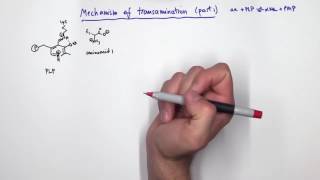
Lexicon of Biochemical Reactions: Vitamin B6 / PLP
4
Lexicon of Biochemical Reactions: Redox Cofactors
5
Problem Set 1, Problem 1: Sizes and Equilibria
6
5. Enzymes and Catalysis
7
Problem Set 2, Problem 1: Primary Structure
8
Problem Set 3, Problem 2: Proteases: Mechanisms of Inhibition
9
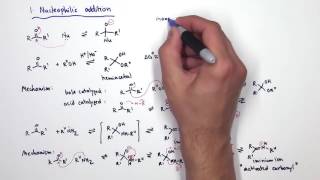
Carbonyl Chemistry
Carbonyl Chemistry
10
Problem Set 4, Problem 2: The Mechanism of HMG-CoA Synthase
11
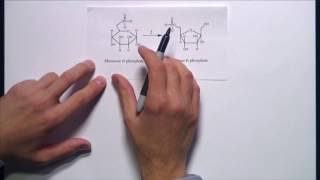
Problem Set 5, Problem 5: How Mannose, an Isomer of Glucose, Enters Glycolysis
12
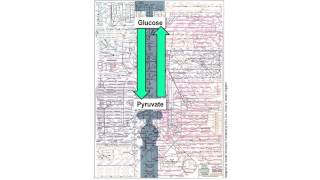
Introduction to Carbohydrate Catabolism
13
Problem Set 6, Problem 2: Mechanism of Phosphoglycerate Mutase
14
Glycolysis and Early Stages of Respiration
15
Respiration: TCA Cycle
16
Problem Set 7, Problem 1: Tracing Labels through Pathways
17
Maintenance of Redox Neutrality
18
Respiration: Electron Transport and Oxidative Phosphorylation
19
Problem Set 8, Problem 2: Bioenergetics of the Electron  Transport Chain
Problem Set 8, Problem 2: Bioenergetics of the Electron Transport Chain
20
Respiration: Proton Pumps and ATP Synthesis
21
Lipod Catabolism: Fatty Acid Beta-Oxidation
22
Special Cases in Fatty Acid Metabolism
23
Problem Set 9, Problem 1: Catabolism of Triacylglycerols
24
Ketogenesis, Diabetes, and Starvation
25
The Science Behind Type II Diabetes
26
Blood Sugar Fluctuations and Gluconeogenesis
27
When Your Breath Smells Like Nail Polish Remover
28
Fatty Acids and Lipid Biosynthesis
29
Carbohydrate Biosynthesis I: Glycogen Synthesis
30
Carbohydrate Biosynthesis II: Gluconeogenesis
31
Problem Set 10, Problem 3: Gluconeogenesis
32
Pentose Phosphate Pathway
33
PLP (Pyridoxal Phosphate) Reactions
34
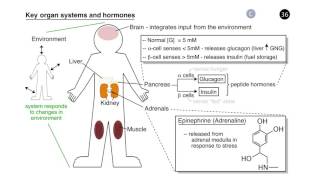
Regulation of Metabolism